
Why Is a Throttle Body Used in a Motorcycle Engine
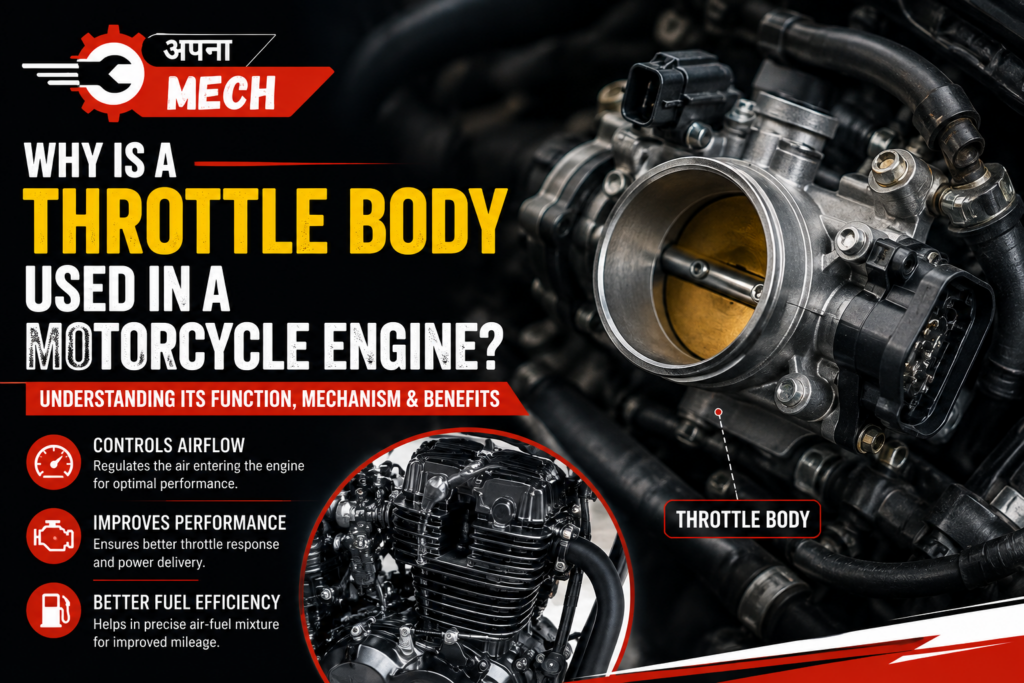
The throttle body is an important part of a modern motorcycle engine. It controls the amount of air entering the engine and plays a major role in throttle response, engine performance, fuel efficiency, and overall riding experience. Although it is a relatively simple component, its proper operation is essential for smooth engine performance. Understanding how the throttle body works can help riders better understand what happens inside their motorcycle when they twist the throttle.
The Basics of Operation and Mechanism
In simple terms, the throttle body controls the airflow going into the engine. It contains a movable throttle valve that opens and closes according to the rider’s throttle input. Depending on the motorcycle, this movement can happen through a traditional cable or through an electronic control system. When the rider twists the throttle, the valve opens and allows more air to enter the engine. The engine management system then adjusts the fuel supply according to the available air and operating conditions. More airflow, combined with the appropriate amount of fuel, allows the engine to produce more power. When the throttle is nearly closed, only a small amount of air enters the engine, which helps maintain the engine at idle speed. As the throttle opens further, airflow increases and the engine can produce greater power and acceleration. This simple relationship between throttle opening, airflow, fuel delivery, and combustion is one of the main reasons why the throttle body is so important to motorcycle performance.
Comparing Fuel Delivery Systems
Motorcycles have traditionally used two main fuel delivery systems: carburetors and Electronic Fuel Injection (EFI). Carburetors were widely used on older motorcycles, while most modern motorcycles now use fuel-injection systems. On a carbureted motorcycle, the carburetor manages both airflow and fuel mixing. Its throttle valve controls the amount of air entering the engine, while jets and internal passages regulate the fuel that mixes with that air. Fuel-injected motorcycles work differently. The throttle body primarily controls airflow, while electronic fuel injectors supply the required amount of fuel. The ECU uses information from different sensors to determine how much fuel should be delivered under different riding conditions. This separation of airflow and fuel control allows modern fuel-injected motorcycles to achieve more precise engine control, better response, improved efficiency, and cleaner operation.
Sensors and Electronics in a Modern Throttle Body
Modern throttle bodies are closely connected with the motorcycle’s electronic control system. One of the most important components is the Throttle Position Sensor (TPS). It monitors the position of the throttle valve and sends information to the Engine Control Unit (ECU). The ECU uses this information along with data from other sensors to determine how the engine should respond to the rider’s input. Some throttle body systems also include idle air control arrangements that help maintain a stable idle under changing engine conditions. In motorcycles equipped with ride-by-wire technology, there may not be a direct mechanical connection between the throttle grip and throttle valve. Instead, the rider’s throttle input is converted into an electronic signal. The ECU processes this information and controls the throttle actuator accordingly. This technology allows manufacturers to introduce more advanced engine management features and achieve smoother throttle control.
Effects on Performance and Riding Experience
The throttle body does more than simply allow air into the engine. Its design, size and calibration can influence several characteristics of a motorcycle.
- Throttle Response: A properly calibrated throttle body helps the engine respond smoothly and quickly when the rider opens or closes the throttle.
- Power Delivery: The diameter and design of the throttle body influence airflow and can affect how power is delivered across different engine speeds.
- Fuel Economy: Precise airflow and fuel management can improve combustion efficiency and help the motorcycle use fuel more effectively.
- Cold Starts and Warm-Up: Modern engine management systems use sensor information to adjust engine operation during cold starts and warm-up periods.
Design Variations and Configurations
Single Throttle Body vs. Multiple Throttle Bodies
Many motorcycles use a single throttle body connected to the intake manifold. This arrangement helps distribute air to the engine cylinders and is commonly used on a wide range of motorcycles. Some multi-cylinder performance motorcycles use Independent Throttle Bodies (ITBs). In this configuration, individual throttle bodies can be used for separate cylinders. The arrangement can provide direct airflow control and sharp throttle response. Independent throttle body systems are particularly associated with performance-oriented motorcycles where manufacturers are looking for precise engine response and strong high-rpm performance.
Throttle Body Size and Tuning
The size of a throttle body is another important design consideration. A larger throttle body can allow a greater volume of air to enter the engine, which can support higher power output when the rest of the engine is designed to use that airflow. However, simply fitting a larger throttle body does not automatically make a motorcycle faster. If the throttle body is too large for the engine, low-speed response and smoothness can be affected. A smaller throttle body can provide controlled airflow and good low-speed response, but it may limit airflow at higher engine speeds. Manufacturers therefore select throttle body size according to the engine’s characteristics and the motorcycle’s intended purpose. A high-performance sports bike may require a different setup from a commuter motorcycle designed for smooth everyday riding.
Throttle Body Maintenance and Common Problems
Like other engine components, the throttle body can develop problems over time. Regular inspection and proper maintenance can help identify issues before they affect motorcycle performance.
- Carbon and Dirt Build-up: Oil vapour, fuel residue and dirt can accumulate around the throttle plate and intake area. Excessive build-up may contribute to rough idling or inconsistent throttle response.
- Wear in Moving Components: The throttle shaft and related components can experience wear over long periods of use, potentially affecting smooth throttle operation.
- Sensor Problems: A faulty throttle position sensor or other electronic component can result in poor engine response, unstable running or warning lights on the dashboard.
- Synchronization Issues: Motorcycles using multiple throttle bodies may require synchronization. Incorrect synchronization can result in rough running, uneven response, reduced performance or poor fuel economy.
Throttle body maintenance generally involves inspection and, when necessary, careful cleaning using appropriate procedures. Multi-throttle-body motorcycles may also require synchronization using specialized equipment. Modern motorcycles with electronic engine management can often detect certain sensor or throttle-related faults and display a warning before the problem becomes more serious.
Conclusion
The throttle body is a key component in modern motorcycle engines because it controls airflow and works closely with the fuel delivery and electronic engine management systems. It directly influences throttle response, power delivery, fuel efficiency and overall ride quality. For riders, unusual idling, poor throttle response, hesitation or engine warning lights should not be ignored. A professional inspection can help identify whether the throttle body, sensors or another engine component is responsible for the problem. As motorcycle technology continues to develop, throttle bodies and electronic throttle systems will become even more sophisticated. However, their basic purpose will remain the same: to control the engine’s airflow and provide a smooth connection between the rider’s throttle input and the motorcycle’s performance.

Add comment