OBD Scanner for Bikes: What It Does and Why It Matters
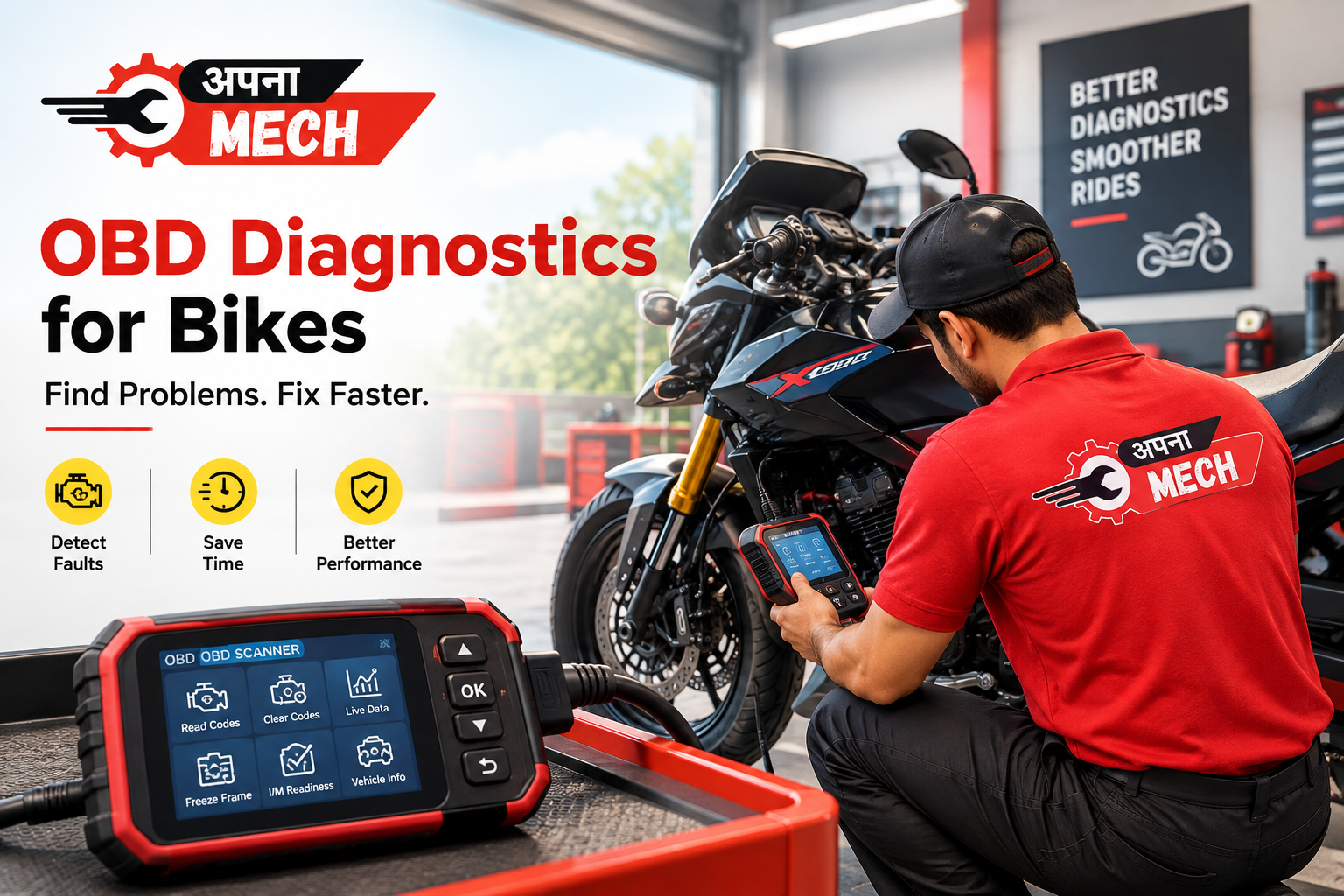
Modern bikes are becoming more advanced. Along with better engines, fuel injection and improved electronics, many new motorcycles and scooters now come with an OBD (On-Board Diagnostics) system. It helps the bike monitor different parts of the engine and electrical system and can alert the rider when something is not working properly. For many riders, the first time they hear about OBD is when a mechanic connects a diagnostic scanner to their bike. But what exactly does OBD do, and how does it help during servicing? Let’s understand it in simple words.
What Is OBD in a Bike?
OBD stands for On-Board Diagnostics. It is an electronic system that monitors important functions of a vehicle. Sensors installed at different points of the bike send information to the engine control unit (ECU). If the system detects an abnormal reading or a fault, it can store a diagnostic trouble code (DTC). A compatible diagnostic scanner can then read these codes and help the mechanic understand where the problem may be. In simple terms, OBD works like a health-check system for the bike’s electronic and engine-related components.
How Does OBD Work?
The ECU continuously receives information from various sensors while the bike is running. Depending on the motorcycle, these may include sensors related to engine temperature, throttle position, oxygen level, engine speed and other systems. When the ECU notices something outside the expected range, it can record a fault code. A mechanic can connect an OBD scanner through the bike’s diagnostic connector and check the stored information.
Note: OBD systems and the information available through them vary by bike model and manufacturer.
What Can OBD Diagnostics Help Check?
OBD diagnostics can be useful when investigating problems related to the engine management and electronic systems. Depending on the motorcycle, it may help identify issues involving:
- Fuel injection and engine management
- Oxygen or related exhaust sensors
- Engine temperature sensors
- Throttle-related sensors
- Ignition and engine control systems
- Certain electrical or electronic faults
- Emission-related problems
- Stored diagnostic trouble codes
The scanner does not automatically mean that a particular part has failed. The code is a starting point for diagnosis, and the mechanic still needs to inspect the bike properly.
Why Is OBD Useful During Bike Servicing?
One of the biggest advantages of OBD is that it can make troubleshooting more systematic. Instead of checking every component randomly, a mechanic can first look at the diagnostic information and then inspect the relevant system.This can save time and help avoid unnecessary part replacement. For example, if the bike has a warning light and the ECU has stored a fault code, the mechanic can read the code and check the related wiring, sensor, connections and other components before deciding on the repair.
OBD Helps With Warning Lights
The check-engine or malfunction indicator light is an important reason why riders use OBD diagnostics. If the warning light appears, simply ignoring it may not be a good idea. The bike may still run normally, but there could be an underlying issue that needs attention. An OBD scan can help identify whether a relevant fault code has been stored and guide the mechanic towards further inspection.
Does OBD Make Bike Servicing Easier?
Yes, especially for newer bikes with more electronic systems. Traditional servicing still includes physical checks such as engine oil, brakes, tyres, chain, battery, filters and other components. OBD does not replace these checks. Instead, it adds an electronic diagnostic layer to the servicing process. A good service combines scanner-based diagnosis with proper physical inspection and testing.
Can OBD Find Every Bike Problem?
No. This is an important point.
OBD is mainly useful for systems that are monitored electronically by the motorcycle’s ECU. It may not detect every mechanical problem. For example, worn brake pads, a damaged tyre, loose chain, some mechanical noises or certain physical problems may require a direct inspection by a mechanic. That is why an OBD scanner should be considered a diagnostic tool, not a complete replacement for a mechanic’s inspection.
When Should You Get an OBD Scan?
An OBD check can be useful when:
- The check-engine light comes on.
- The bike is showing unusual engine behaviour.
- Fuel efficiency suddenly changes.
- The engine is running roughly.
- You experience starting or performance issues.
- A warning appears on the instrument cluster.
- A recurring electronic problem needs investigation.
- You want to check stored fault information during troubleshooting.
The exact symptoms and diagnostic procedure will depend on the bike model.
OBD and Regular Bike Servicing
Regular servicing remains important even when there is no warning light. Engine oil, brakes, tyres, chain, battery, air filter and other service items still need to be checked according to the manufacturer’s recommendations. For newer motorcycles, adding an OBD scan where appropriate can give the mechanic additional information about the bike’s electronic systems. This is particularly useful when a customer reports a problem that is not immediately visible during a normal inspection.
Final Thoughts
OBD diagnostics has made bike troubleshooting more technology-based. It gives mechanics useful information from the motorcycle’s electronic control system and can make fault-finding faster and more organised. However, an OBD code should not be treated as the final answer. A trained mechanic needs to understand the code, inspect the related components and identify the actual cause before carrying out a repair. At Apna Mech, modern diagnostic methods can be combined with regular inspection and servicing to help keep two-wheelers in better condition. Whether it is a warning light, engine issue, electrical problem or routine maintenance, proper diagnosis is an important part of good bike servicing.

Add comment