
Buying a Second-Hand Bike? Here Are the Important Things You Must Check Before Purchasing
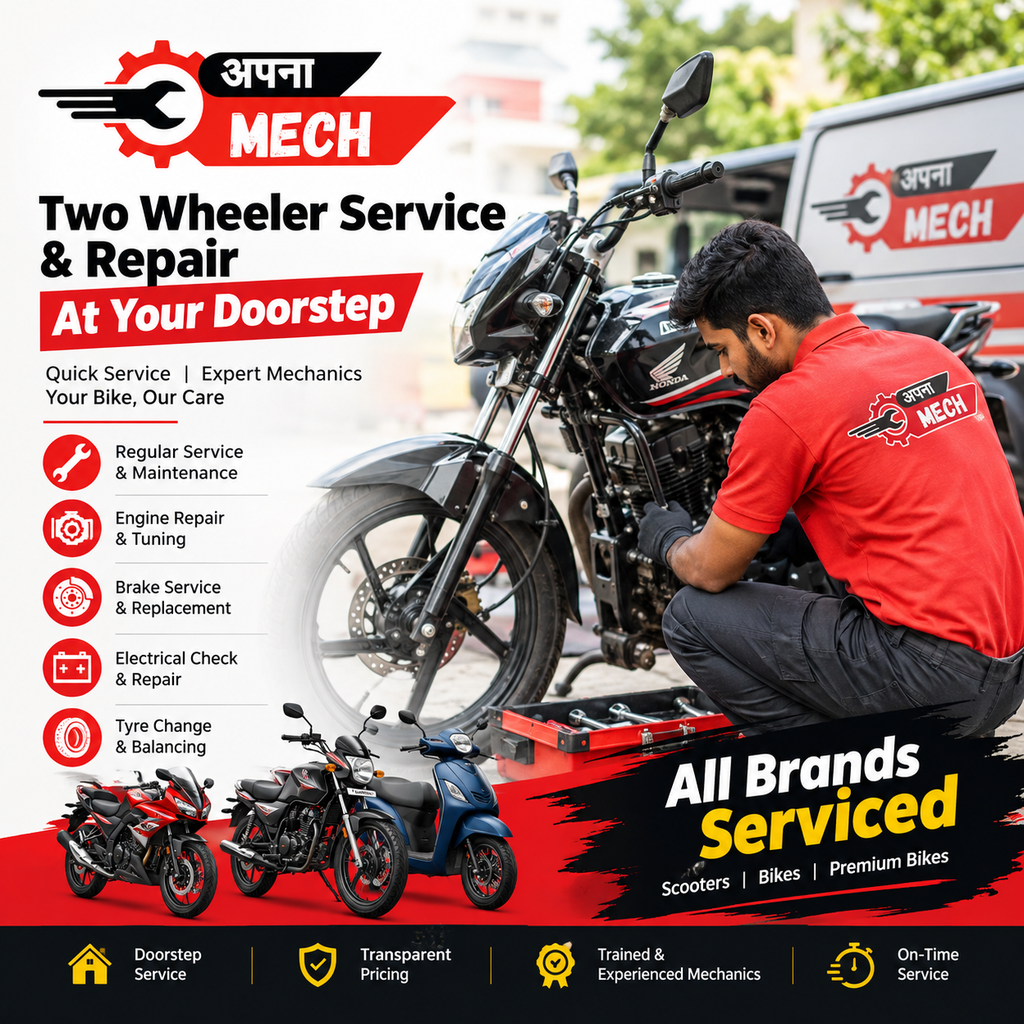
Buying a second-hand bike or scooter can be a smart decision. You can save money compared to buying a new vehicle, and you may find a good bike that still has many years of life left. But buying a used two-wheeler without checking its condition properly can lead to unexpected repair costs, safety problems and paperwork issues. Sometimes a bike looks clean from the outside but has engine problems, accident damage, worn-out tyres or electrical faults. A seller may also be unaware of certain problems, so it is always better to inspect the vehicle carefully before making a decision. If you are planning to buy a used motorcycle or scooter, here is a simple guide from Apna Mech to help you understand what to check before purchasing.
1. Check the Bike’s Overall Condition
Start by looking at the bike from all sides. Check whether it looks well-maintained or has signs of rough use. Look for scratches, dents, broken plastic panels, loose parts and rust on metal surfaces. Pay attention to the fuel tank, handlebar, footrests, exhaust, mirrors and side panels. Also, check whether the body panels fit properly. Uneven gaps or parts that do not match the rest of the bike may indicate previous repairs or accident damage. A few scratches are normal on a used bike. However, major dents, a bent handlebar or visible frame damage need closer inspection.
Tip: Do not judge a bike only by its appearance. A freshly polished bike can still have mechanical problems.
2. Inspect the Engine Carefully
The engine is one of the most important parts to check because major engine repairs can be expensive. If possible, ask the seller not to start the bike before you arrive. Starting it when the engine is cold can help you notice problems that may not be obvious after it has warmed up.
- Starting problem: The engine should start without excessive cranking or repeated attempts.
- Unusual noise: Knocking, metallic rattling or loud ticking sounds may indicate a mechanical issue.
- Smoke from the exhaust: Persistent blue smoke can indicate oil burning. Excessive black smoke may point to a fuel or combustion problem.
- Oil leakage: Look around the engine, cylinder head, gaskets and lower engine area for oil leaks.
- Engine overheating: Excessive heat, warning lights or coolant loss may indicate a problem, especially on liquid-cooled bikes.
- Unstable idling: The engine should run reasonably smoothly without repeatedly stalling.
A little engine vibration can be normal, depending on the model. However, unusual noises, persistent smoke or oil leakage should be checked by a qualified mechanic before you buy the bike.
3. Check the Odometer and Service History
The odometer shows the distance travelled by the vehicle, but the reading alone does not tell you its actual condition.For example, a bike showing 15,000 kilometres may have been poorly maintained, while another with 35,000 kilometres may still be in good condition because it received regular servicing. Check the service records, previous repair bills and available maintenance history. Compare the odometer reading with the bike’s overall wear. Look at the condition of the footrests, handlebar grips, seat, tyres and other frequently used parts. If these show heavy wear but the odometer reading is unusually low, ask the seller for an explanation. Service history is helpful, but it does not guarantee that every part is in good condition.
4. Inspect the Tyres, Brakes and Suspension
Tyres, brakes and suspension directly affect your safety, so never ignore them during an inspection. Tyres: Check the tread depth, sidewalls, cracks and uneven wear. Tyres that are badly worn or cracked may need replacement soon. Uneven wear can sometimes indicate incorrect tyre pressure, alignment problems or suspension issues. Brakes: Test the front and rear brakes carefully. The levers and pedals should feel consistent, and the bike should slow down without unusual noises or excessive vibration. Check the brake pads, discs or drums for wear and damage. Suspension: Press down gently on the front suspension and check whether it returns smoothly. Look for oil leakage around the front forks. On the rear, check for excessive bouncing, unusual noises or visible damage. If the bike has ABS, check that the ABS warning light behaves as described in the owner’s manual and that no warning remains illuminated after the normal startup checks. If any of these components are in poor condition, include the estimated repair or replacement cost when negotiating the price.
5. Check the Chain, Clutch and Gears
For motorcycles with a chain drive, inspect the chain and sprockets. A very loose, rusty or excessively tight chain may need adjustment or replacement. Worn sprocket teeth can also be a sign that maintenance has been neglected. For scooters and other vehicles with different transmission systems, ask a mechanic to check the relevant drive components. During a test ride, pay attention to the clutch and gear shifting.
- The clutch should operate smoothly.
- Gears should engage without unusual difficulty.
- The bike should not jerk excessively when accelerating.
- The engine speed should respond normally when you open the throttle.
If the engine revs increase significantly without a matching increase in speed, the clutch may be slipping. Gearbox repairs can be costly, so have the issue checked before buying.
6. Inspect the Electrical System and Battery
Electrical problems can be frustrating because some faults occur only occasionally. Turn on the ignition and check the headlight, high beam, indicators, tail light, brake light, horn, instrument cluster and starter. Check the battery condition and ask how old it is. Look for loose wires, damaged connectors, corrosion around battery terminals and signs of unprofessional electrical modifications. If the bike has a digital display, confirm that the important readings and warning indicators work correctly. For electric scooters and motorcycles, inspect the charging port, charger, display, battery warnings and charging performance. If possible, request a battery health report from an authorised service provider. Battery replacement can be a significant expense on an electric two-wheeler.
7. Look for Signs of an Accident
A bike that has been involved in an accident is not automatically a bad purchase, but the extent and quality of the repairs matter.
- Bent handlebars or footrests.
- Scratches on the engine casing, exhaust or frame.
- Uneven gaps between body panels.
- Misaligned wheels or mudguards.
- Cracked welds or visible frame damage.
- Fresh paint or repairs in isolated areas.
During a test ride, notice whether the bike pulls to one side or the steering feels unusual. These symptoms can have several causes, including tyre pressure, alignment or suspension problems, so they should be inspected professionally.
8. Take a Proper Test Ride
A test ride helps you understand how the bike behaves on the road. Take one only with the owner’s permission, a valid driving licence, a helmet and the legally required documents and insurance in place.
- Whether the engine starts and accelerates smoothly.
- Whether the clutch and gears work properly.
- Whether the brakes respond correctly.
- Whether the handlebar feels stable.
- Whether you hear unusual noises or notice excessive vibration.
- Whether the suspension handles normal road bumps properly.
- Whether any warning lights appear during the ride.
Avoid aggressive acceleration or high-speed testing. If the seller does not allow a reasonable inspection or test ride, consider arranging an independent inspection before committing to the purchase.
9. Verify the RC and Other Documents
Mechanical condition is only one part of buying a used bike. You must also confirm that the vehicle can be legally transferred into your name. Registration Certificate (RC): Confirm the registration number, owner’s name, chassis number and engine number against the actual vehicle and available records. Insurance: Check that the insurance is valid and review its details. The ownership and policy records may need updating after the sale. Pollution Under Control (PUC) certificate: Check whether a valid certificate is required for the vehicle and confirm its status. Service and repair bills: These can help you understand the bike’s maintenance history. Loan or hypothecation status: If the RC shows a financier or active hypothecation, confirm that the loan has been settled and the required removal process completed. Pending challans: Check for unpaid traffic challans using the official government e-Challan portal. Ownership transfer: Make sure the required transfer application and supporting documents are completed through the relevant RTO or official Parivahan process.
You can begin checking registration-related services through the official Parivahan website: https://parivahan.gov.in/ For traffic challans, use: https://echallan.parivahan.gov.in/
Never rely only on photocopies or screenshots supplied by the seller. Verify the details through official channels wherever possible.
10. Check the Chassis Number and Engine Number
The chassis number and engine number help identify the vehicle. Locate the numbers as described in the owner’s manual or ask a mechanic to help you find them. Compare them with the RC and other official records. Make sure the numbers are readable and there are no suspicious alterations, grinding marks or signs of tampering. If the numbers do not match the documents or appear to have been altered, do not proceed with the purchase until the discrepancy has been properly resolved with the relevant authority.
11. Check the Market Price and Estimate Repair Costs
Before agreeing on a price, compare the asking amount with similar bikes of the same model, manufacturing year, variant and approximate condition. Remember that the cheapest bike is not always the best deal. A low purchase price may hide expensive repairs. Ask a mechanic to estimate the cost of any immediate work, such as replacing tyres, brake pads, the battery, the chain set or worn suspension components. Also consider upcoming servicing, insurance and transfer-related expenses. Use these estimated costs when negotiating with the seller. If the bike needs major engine work or has unresolved document problems, it may be better to look for another vehicle.
12. Common Problems to Watch Out for
| Problem | What it may indicate | What to do |
|---|---|---|
| Blue smoke from exhaust | Possible engine oil burning | Get the engine checked |
| Oil leakage | Worn seals, gaskets or other faults | Inspect before purchase |
| Hard starting | Battery, fuel system or engine issue | Request a proper diagnosis |
| Uneven tyre wear | Pressure, alignment or suspension issue | Check tyres and chassis alignment |
| Weak brakes | Worn pads, shoes or other brake faults | Repair before riding |
| Unusual gearbox noise | Possible transmission problem | Have a mechanic inspect it |
| Frequent electrical failures | Battery, wiring or charging issue | Test the electrical system |
| Missing or mismatched documents | Ownership or registration concern | Verify with the RTO before paying |
These signs do not always mean the bike has a major fault, but they should never be ignored.
13. Get a Professional Inspection Before Finalising the Deal
If you are not familiar with motorcycle mechanics, you do not have to inspect everything yourself. A trained mechanic can check the engine, brakes, suspension, electrical system, tyres, transmission and other important components. A professional inspection can help you identify problems that may not be visible during a short test ride. It also gives you a clearer idea of the bike’s condition and likely repair expenses. At Apna Mech, vehicle care is about helping riders make informed decisions and maintain their two-wheelers properly. If you are considering a second-hand bike or scooter, arrange a thorough inspection before making your final payment.
Final Thoughts
Buying a second-hand bike can be a great way to save money, provided you choose carefully. Take your time, inspect the mechanical condition, check the documents, verify ownership and take a safe test ride before making a decision. Do not let a shiny appearance or a low price rush you into a purchase. A few checks before buying can help you avoid unexpected expenses and give you greater confidence on the road.
Apna Mech – Your Bike, Our Care!

Add comment