
Engine Braking in Bikes: What It Is, How It Works, and Why Every Rider Should Know It
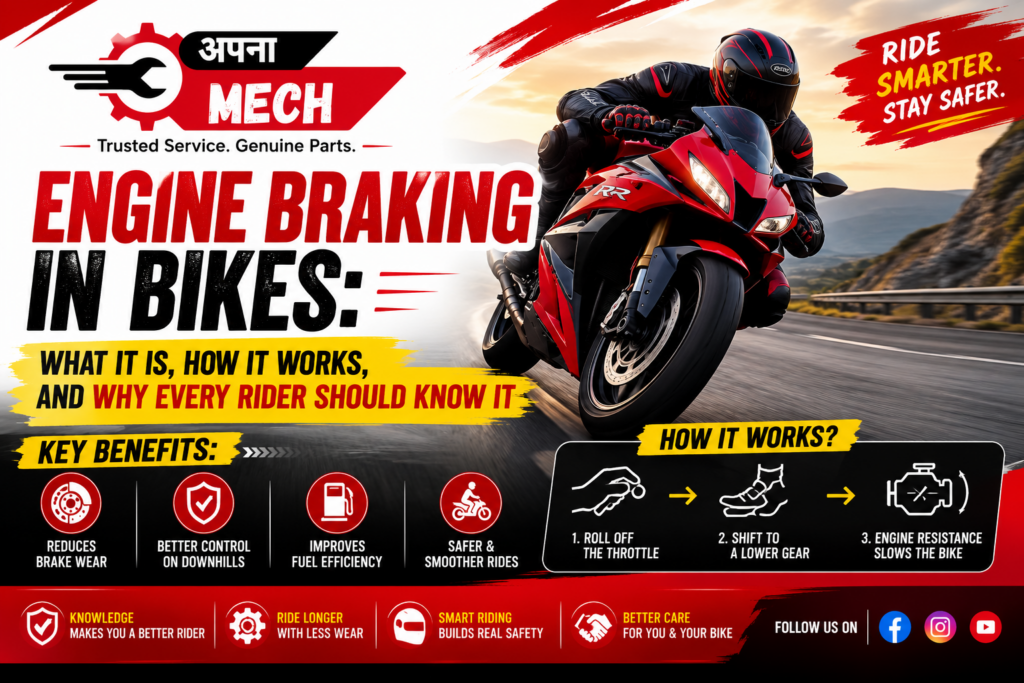
Most riders learn how to use the throttle, clutch, and brakes, but very few understand another useful riding technique called engine braking. Whether you’re riding through city traffic, descending steep hills, or approaching a sharp corner, engine braking can help you ride more smoothly and confidently.
When used correctly, engine braking improves vehicle control, reduces brake wear, and makes your overall riding experience safer.
At Apna Mech, we encourage every rider to understand this simple technique as part of safe motorcycle riding.
What is Engine Braking?
Engine braking is the process of slowing down your motorcycle by reducing the throttle and allowing the engine’s resistance to decrease the bike’s speed instead of relying only on the brakes.
As you release the accelerator, the engine naturally begins to slow the rear wheel, helping the motorcycle decelerate in a controlled manner.
Rather than applying heavy braking every time you reduce speed, the engine itself assists in slowing the bike.
How Does Engine Braking Work?
When you close the throttle:
- Fuel supply reduces.
- The engine begins resisting wheel movement.
- The rear wheel slows down gradually.
- The motorcycle loses speed without excessive brake application.
If required, riders can shift to a lower gear to increase the engine braking effect.
The key is to downshift smoothly while matching the engine speed with the road speed.
Benefits of Engine Braking
Using engine braking correctly offers several advantages.
Better Control
Engine braking provides gradual deceleration, allowing riders to maintain better balance and control, especially while approaching traffic signals or bends.
Reduces Brake Wear
Since the engine helps slow the motorcycle, brake pads and brake discs experience less wear, increasing their lifespan.
Improves Riding Comfort
Instead of sudden braking, engine braking offers smoother speed reduction, making rides more comfortable for both rider and pillion.
Prevents Brake Overheating
During long downhill rides, continuous brake usage can generate excessive heat.
Engine braking reduces the load on the braking system and helps prevent brake fade.
Saves Maintenance Costs
Less brake wear means fewer replacements and lower maintenance expenses over time.
When Should You Use Engine Braking?
Engine braking is particularly useful in several riding situations.
During Long Downhill Rides
Using only the brakes while descending steep roads can overheat the braking system.
Engine braking helps maintain a controlled speed without constantly applying the brakes.
Approaching Traffic Signals
Instead of accelerating until the last moment, release the throttle early and let the engine gradually reduce speed.
While Riding in Heavy Traffic
Frequent stop-and-go traffic becomes smoother when you combine gentle engine braking with light brake application.
Before Entering Corners
Reducing speed before entering a turn improves stability and provides better control throughout the corner.
Engine Braking vs Normal Braking
Although both methods slow the motorcycle, they work differently.
| Feature | Engine Braking | Brake Application |
|---|---|---|
| Uses Engine Resistance | Yes | No |
| Uses Brake Pads | Minimal | Yes |
| Ideal For | Gradual slowing | Quick stopping |
| Brake Wear | Low | Higher |
| Emergency Stops | Not Suitable Alone | Essential |
For maximum safety, engine braking and normal braking should be used together whenever required.
How to Use Engine Braking Properly
Follow these simple steps:
- Release the throttle smoothly.
- Allow the motorcycle to begin slowing naturally.
- Pull the clutch when necessary.
- Shift down one gear at a time.
- Release the clutch gradually.
- Repeat if further speed reduction is required.
- Apply brakes whenever additional stopping power is needed.
Avoid sudden downshifts, as they can upset the motorcycle’s balance.
Common Mistakes Riders Make
Many beginners misuse engine braking.
Avoid these common errors:
- Downshifting multiple gears at once
- Releasing the clutch suddenly
- Depending entirely on engine braking
- Entering corners too fast before downshifting
- Ignoring engine RPM during gear changes
Practising smooth gear changes is the key to effective engine braking.
Does Engine Braking Damage the Engine?
This is one of the most common questions among riders.
The answer is No.
Modern motorcycles are designed to handle engine braking without causing engine damage.
However, aggressive downshifting at high speeds can place unnecessary stress on the transmission and clutch.
Using proper riding techniques keeps both the engine and gearbox safe.
Tips for Safe Engine Braking
To get the best results:
- Downshift gradually.
- Maintain smooth throttle control.
- Avoid sudden clutch release.
- Practise on quiet roads before using it in heavy traffic.
- Keep your motorcycle regularly serviced.
- Ensure clutch and gearbox are in good condition.
- Never rely solely on engine braking during emergencies.
Proper maintenance also plays an important role in ensuring smooth engine braking performance.
Importance of Regular Bike Maintenance
A motorcycle with poor maintenance may not respond smoothly during engine braking.
Regular servicing helps maintain:
- Clutch performance
- Gearbox operation
- Engine efficiency
- Chain condition
- Brake performance
- Engine oil quality
Routine maintenance ensures a safer and more enjoyable riding experience.
Why Choose Apna Mech?
At Apna Mech, we provide complete motorcycle servicing and repairs to keep your bike performing at its best.
Our services include:
- Complete Bike Inspection
- Multi-Brand Bike Service
- Engine Diagnostics
- Clutch Repair
- Gearbox Inspection
- Engine Oil Replacement
- Chain Cleaning & Lubrication
- Brake Service
- Periodic Maintenance
- Electrical Repairs
- Genuine Spare Parts
- Doorstep Bike Service (Available in Selected Cities)
- Experienced Mechanics
- Transparent Pricing
Whether you’re riding a commuter motorcycle or a premium touring bike, our experts ensure your motorcycle remains safe, reliable, and road-ready.
Final Thoughts
Engine braking is a simple yet valuable riding technique that improves control, reduces brake wear, and enhances riding safety. Once you understand how it works and practise using it correctly, it becomes a natural part of everyday riding.
Remember that engine braking should complement your brakes—not replace them. Safe riding always involves proper judgement, smooth gear changes, and regular motorcycle maintenance.
If your bike requires servicing, clutch adjustment, gearbox inspection, or a complete health check, Apna Mech is here to help with professional multi-brand bike service and doorstep assistance.
Book your next bike service with Apna Mech and keep your motorcycle performing at its best on every ride.
Frequently Asked Questions
1. What is engine braking in a bike?
Engine braking is a riding technique where the motorcycle slows down naturally by releasing the throttle and using the engine’s resistance instead of relying only on the brakes.
2. Is engine braking safe?
Yes. When performed correctly, engine braking is completely safe and helps improve riding control while reducing brake wear.
3. Can engine braking damage my motorcycle?
No. Modern motorcycles are designed to handle engine braking. Problems usually occur only when riders downshift aggressively at very high speeds.
4. When should I use engine braking?
It is useful while approaching traffic signals, riding downhill, slowing before corners, and managing speed in city traffic.
5. Does engine braking reduce brake wear?
Yes. Since the engine assists in slowing the motorcycle, brake pads and discs experience less wear, helping reduce maintenance costs.

Add comment