
ABS vs Non-ABS Bikes: Which Braking System is Better for Indian Riders?
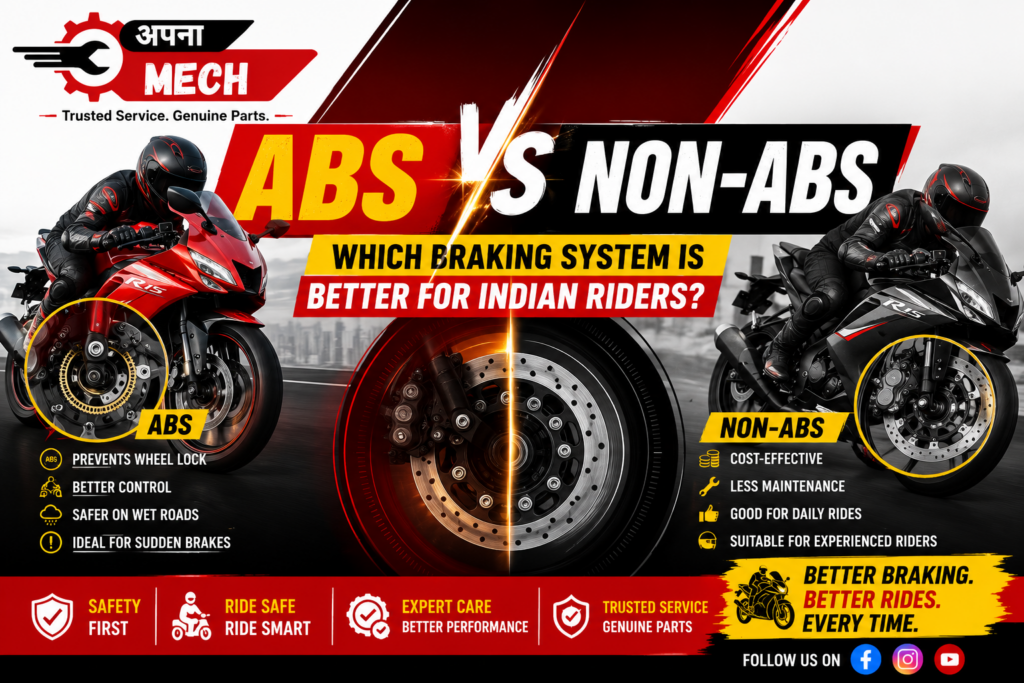
Braking is one of the most important safety features of any motorcycle. Whether you’re riding through busy city traffic, navigating slippery monsoon roads, or travelling on highways, your bike’s braking system can make a significant difference during emergency situations.
Today, many motorcycles come equipped with Anti-lock Braking System (ABS), while some commuter bikes still use conventional braking systems or Combined Braking System (CBS). But what exactly is the difference, and which one should you choose?
At Apna Mech, we help riders understand their motorcycles better so they can make informed decisions about safety, maintenance, and performance.
What is ABS in a Motorcycle?
ABS, or Anti-lock Braking System, is an advanced safety technology that prevents the wheels from locking when the brakes are applied suddenly.
The system continuously monitors wheel speed using electronic sensors. If it detects that a wheel is about to lock during hard braking, it automatically adjusts the brake pressure several times every second.
This allows the tyres to maintain grip with the road, helping the rider stay in control of the motorcycle.
What is a Non-ABS Bike?
A non-ABS motorcycle uses a traditional braking system where the braking force depends entirely on the rider.
If excessive pressure is applied, especially on wet or slippery roads, the wheels may lock, causing the bike to skid or lose balance.
While experienced riders may control such situations, beginners often find them difficult to manage.
How Does ABS Work?
The ABS system operates automatically whenever emergency braking is required.
Its main components include:
- Wheel Speed Sensors
- Electronic Control Unit (ECU)
- Hydraulic Control Unit
- Brake Calipers
When the rider applies sudden braking:
- Sensors detect wheel speed.
- The ECU analyses the data.
- Brake pressure is adjusted instantly.
- The wheel continues rotating instead of locking.
- The motorcycle remains stable and steerable.
The entire process happens within milliseconds.
Major Differences Between ABS and Non-ABS Bikes
| Feature | ABS Bikes | Non-ABS Bikes |
|---|---|---|
| Wheel Lock Prevention | Yes | No |
| Skid Control | Better | Limited |
| Rider Control | Excellent | Depends on rider skill |
| Emergency Braking | Safer | Higher risk of skidding |
| Wet Road Performance | Better | Requires extra caution |
| Braking Confidence | High | Moderate |
Benefits of ABS Bikes
ABS provides several advantages for everyday riders.
Improved Safety
ABS helps reduce the chances of wheel lock-up during sudden braking, allowing the motorcycle to remain stable.
Better Control
Since the wheels continue rotating, riders can steer the motorcycle while braking to avoid obstacles.
Safer Riding During Rain
Wet roads significantly reduce tyre grip.
ABS helps maintain traction during emergency braking on slippery surfaces.
Greater Rider Confidence
New riders often panic during emergencies.
ABS provides additional confidence by reducing the likelihood of skidding.
Better Highway Performance
At higher speeds, controlled braking becomes even more important.
ABS improves braking stability during highway riding.
Advantages of Non-ABS Bikes
Although ABS is safer, conventional braking systems also have certain advantages.
These include:
- Lower purchase price
- Simpler mechanical design
- Lower repair costs
- Easier maintenance
- Lightweight braking system
For riders who mainly use motorcycles for short city commutes, non-ABS bikes can still perform well when ridden carefully.
Limitations of Non-ABS Bikes
Without ABS, riders face a higher risk of:
- Wheel lock-up
- Skidding
- Loss of balance
- Longer recovery during emergency braking
- Reduced control on wet roads
Proper braking technique becomes essential when riding motorcycles without ABS.
ABS vs CBS – What’s the Difference?
Many entry-level motorcycles in India use Combined Braking System (CBS) instead of ABS.
CBS distributes braking force between the front and rear wheels whenever the rider applies one brake.
While CBS improves braking balance, it does not prevent wheel lock-up like ABS.
ABS offers superior safety during panic braking situations.
Which Riders Should Choose ABS?
ABS is highly recommended for:
- New riders
- Daily commuters
- Highway riders
- Riders who frequently travel during monsoon
- Long-distance tourers
- Premium motorcycle owners
It significantly improves rider confidence and overall road safety.
Is ABS Mandatory in India?
According to Indian safety regulations, motorcycles above 125cc are generally required to be equipped with at least Single-Channel ABS, while many premium motorcycles now feature Dual-Channel ABS.
This regulation has helped improve motorcycle safety across the country.
Does ABS Require Maintenance?
ABS systems require very little maintenance.
However, regular servicing is still important.
Routine maintenance includes:
- Brake fluid inspection
- Brake pad replacement
- Disc inspection
- ABS sensor cleaning
- Brake line inspection
- ECU diagnostics
Ignoring brake maintenance can reduce overall braking performance, even on ABS-equipped motorcycles.
Why Choose Apna Mech?
At Apna Mech, we provide professional brake inspection and servicing for motorcycles equipped with both ABS and conventional braking systems.
Our services include:
- Complete Bike Inspection
- ABS Diagnostics
- Brake Pad Replacement
- Disc Brake Service
- Brake Fluid Replacement
- Periodic Bike Service
- Engine Oil Replacement
- Suspension Inspection
- Electrical Diagnostics
- Multi-Brand Bike Service
- Genuine Spare Parts
- Doorstep Bike Service (Available in Selected Cities)
- Experienced Mechanics
- Transparent Pricing
Our expert technicians ensure your motorcycle’s braking system performs efficiently when you need it the most.
Final Thoughts
Choosing between an ABS and a non-ABS motorcycle depends on your riding needs, experience, and budget. However, when it comes to safety, ABS offers a clear advantage by improving stability and helping prevent wheel lock-up during sudden braking.
Whether you ride daily in city traffic or frequently travel on highways, maintaining your braking system is just as important as choosing the right one.
At Apna Mech, we recommend regular brake inspections and periodic servicing to keep your motorcycle safe, reliable, and ready for every journey.
Book your bike service with Apna Mech today for expert brake inspection, professional repairs, and complete two-wheeler care.
Frequently Asked Questions
1. What is the main difference between ABS and non-ABS bikes?
ABS motorcycles use electronic sensors to prevent wheel lock-up during hard braking, while non-ABS bikes rely entirely on the rider’s braking control.
2. Is ABS better for beginners?
Yes. ABS helps new riders maintain better control during emergency braking and significantly reduces the chances of skidding.
3. Can ABS prevent all accidents?
No. ABS improves braking safety and control, but riders must still maintain safe speeds, proper following distances, and responsible riding habits.
4. Does ABS increase bike maintenance costs?
Not significantly. Regular brake servicing and periodic inspections are generally sufficient to keep the ABS system working properly.
5. Can Apna Mech service ABS bikes?
Yes. Apna Mech provides brake inspection, ABS diagnostics, brake pad replacement, periodic servicing, and complete maintenance for ABS and non-ABS motorcycles across multiple brands.

Add comment