Bike Clutch Explained: What It Is, How It Works, and Why It Matters
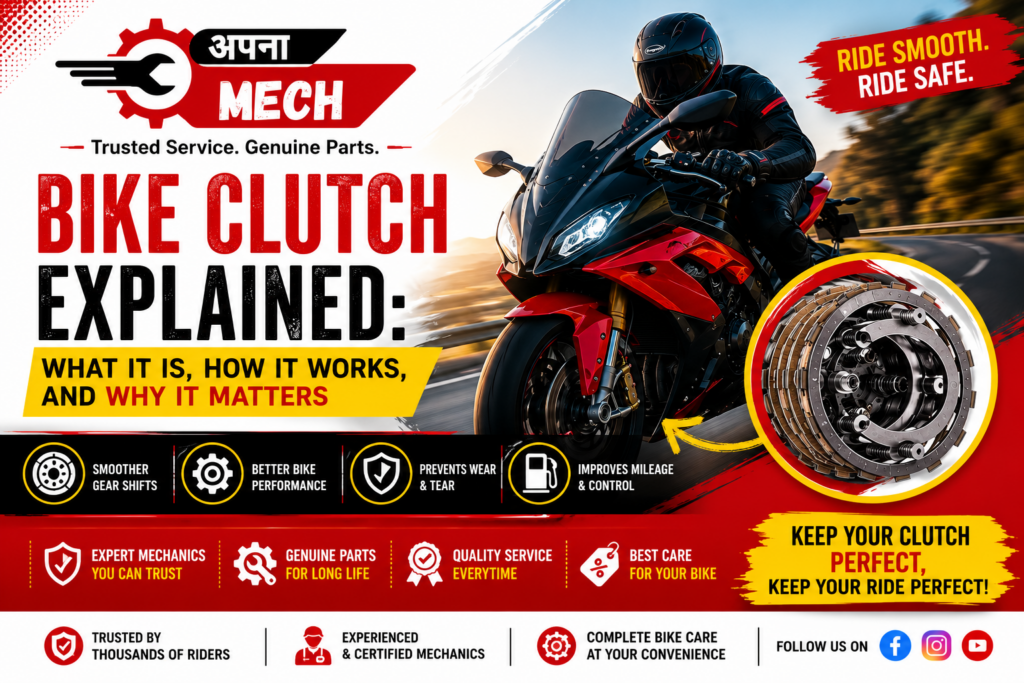
Every time you start your motorcycle, shift gears, or stop at a traffic signal, you use the clutch. While it may seem like a simple lever on the left handlebar, the clutch is one of the most important components of your bike’s transmission system.
A properly functioning clutch ensures smooth gear changes, better control, and a comfortable riding experience. Understanding how it works can also help you avoid expensive repairs caused by poor riding habits.
At Apna Mech, we often receive motorcycles with clutch problems that could have been prevented through regular maintenance and correct usage.
What is a Bike Clutch?
A bike clutch is a mechanical component that connects and disconnects the engine from the gearbox.
In simple terms, it allows you to:
- Start the motorcycle smoothly
- Change gears without damaging the gearbox
- Stop the bike without switching off the engine
- Control power delivery to the rear wheel
Without a clutch, changing gears would be difficult, and the engine would stall every time the motorcycle stopped.
How Does a Motorcycle Clutch Work?
The clutch works by controlling the transfer of engine power to the transmission.
When you pull the clutch lever:
- The clutch plates separate.
- Engine power is temporarily disconnected.
- You can shift gears smoothly.
When you release the clutch:
- The plates reconnect.
- Power flows from the engine to the gearbox.
- The motorcycle begins moving.
Smooth clutch operation is essential for comfortable riding and longer transmission life.
Main Components of a Bike Clutch
A motorcycle clutch consists of several important parts working together.
Clutch Plates
These plates transfer engine power to the gearbox.
Most motorcycles use alternating friction plates and steel plates.
Clutch Basket
The clutch basket holds the clutch plates and rotates with the engine.
Pressure Plate
The pressure plate presses the clutch plates together to transmit engine power efficiently.
Clutch Springs
These springs keep the clutch engaged until the rider pulls the clutch lever.
Clutch Cable or Hydraulic System
The clutch lever operates through either a cable or a hydraulic mechanism depending on the motorcycle model.
Types of Motorcycle Clutches
Modern motorcycles use different clutch systems.
Wet Clutch
The most common type.
The clutch plates operate inside engine oil, which helps with cooling and lubrication.
Advantages include:
- Longer lifespan
- Smooth operation
- Better heat management
Dry Clutch
Used mainly in performance motorcycles.
The plates operate without oil, resulting in faster engagement but increased noise and wear.
Slipper Clutch
Found on many premium motorcycles.
It helps reduce rear-wheel hopping during aggressive downshifting and improves riding stability.
Why is the Clutch Important?
The clutch performs several critical functions.
Smooth Gear Changes
It allows seamless shifting without damaging transmission components.
Comfortable Starts
The clutch helps the motorcycle move gradually from a complete stop.
Better Control
Proper clutch control improves riding confidence in traffic, uphill roads, and slow-speed manoeuvres.
Engine Protection
A healthy clutch reduces stress on the gearbox and transmission.
Common Clutch Problems
Like any moving component, the clutch experiences wear over time.
Some common issues include:
- Clutch slipping
- Hard gear shifting
- Clutch dragging
- Loose clutch cable
- Excessive clutch lever play
- Burning smell
- Unusual clutch noise
Ignoring these signs can lead to costly repairs.
Signs Your Bike Clutch Needs Attention
Your motorcycle may require clutch servicing if you notice:
- Engine RPM increases but speed doesn’t.
- Difficulty shifting gears.
- Motorcycle jerks while starting.
- Clutch lever feels unusually hard or soft.
- Bike stalls frequently.
- Burning smell after riding.
- Reduced acceleration.
If any of these symptoms appear, it’s best to have your motorcycle inspected by experienced technicians.
Reasons Behind Clutch Plate Wear
Several riding habits reduce clutch life.
These include:
- Riding with fingers resting on the clutch lever.
- Half-clutch riding in traffic.
- Aggressive acceleration.
- Poor clutch adjustment.
- Delayed engine oil replacement.
- Overloading the motorcycle.
- Continuous stop-and-go riding.
Changing these habits can significantly extend clutch life.
Tips to Increase Clutch Life
Proper maintenance goes a long way in preventing clutch problems.
Follow these simple tips:
- Release the clutch smoothly.
- Avoid unnecessary half-clutch riding.
- Adjust clutch free play regularly.
- Replace engine oil at recommended intervals.
- Use quality engine oil.
- Avoid sudden gear shifts.
- Service your motorcycle periodically.
- Replace worn clutch plates on time.
A well-maintained clutch delivers smoother performance and reduces repair costs.
Importance of Regular Bike Servicing
Routine servicing helps keep the entire transmission system in excellent condition.
A complete clutch inspection usually includes:
- Clutch plate condition
- Clutch cable adjustment
- Gear shifting performance
- Engine oil inspection
- Gearbox operation
- Clutch lever free play
- Transmission performance
Early diagnosis prevents major mechanical failures.
Why Choose Apna Mech?
Apna Mech provides complete motorcycle servicing and repairs for all major two-wheeler brands.
Our services include:
- Complete Bike Inspection
- Clutch Repair & Replacement
- Gearbox Diagnostics
- Engine Repair
- Engine Oil Replacement
- Chain Cleaning & Lubrication
- Brake Service
- Electrical Repairs
- Periodic Bike Service
- Multi-Brand Bike Service
- Genuine Spare Parts
- Doorstep Bike Service (Available in Selected Cities)
- Experienced Mechanics
- Transparent Pricing
Whether your bike needs a simple clutch adjustment or a complete clutch replacement, our trained mechanics ensure professional and reliable service.
Final Thoughts
The clutch is one of the hardest-working components of your motorcycle. It plays a crucial role in smooth riding, efficient power delivery, and safe gear changes. Learning how it works and maintaining it properly can improve your riding experience while preventing expensive repairs.
Regular servicing, timely engine oil changes, and good riding habits will keep your clutch performing efficiently for thousands of kilometres.
If your motorcycle is showing signs of clutch wear or difficult gear shifting, Apna Mech is here to help with expert diagnostics, professional repairs, genuine spare parts, and convenient doorstep bike service.
Book your bike service with Apna Mech today and enjoy smooth, reliable, and worry-free riding.
Frequently Asked Questions
1. What is the function of a bike clutch?
The clutch connects and disconnects engine power from the gearbox, allowing smooth gear changes and controlled power delivery.
2. How do I know if my clutch plates are worn out?
Common signs include clutch slipping, difficulty changing gears, poor acceleration, jerky starts, and a burning smell from the engine area.
3. Can riding habits affect clutch life?
Yes. Frequent half-clutch riding, aggressive acceleration, and improper clutch usage can significantly reduce clutch lifespan.
4. How often should the clutch be inspected?
The clutch should be checked during every periodic service or immediately if you notice gear shifting issues or clutch slipping.
5. Can Apna Mech repair motorcycle clutch problems?
Yes. Apna Mech offers clutch inspection, clutch plate replacement, gearbox diagnostics, periodic servicing, and complete multi-brand motorcycle repairs by experienced technicians.

Add comment