Driving License in India: All You Need to Know
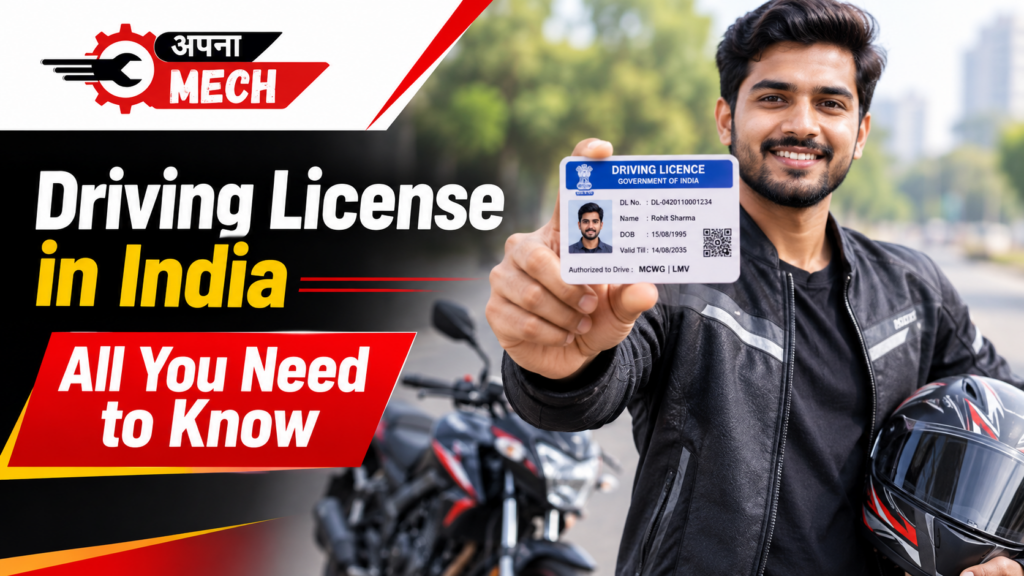
A driving license is one of the most important documents for anyone who wants to ride a motorcycle, scooter or drive a car legally on Indian roads. Whether you are buying your first bike, upgrading to a new motorcycle or regularly commuting to work, having a valid driving license is essential.
A driving license is issued by the government after the applicant completes the required process and meets the applicable eligibility requirements. It confirms that the person has been authorized to drive a particular category of vehicle. For bike owners, having a valid license is just as important as keeping the vehicle’s registration, insurance and Pollution Under Control (PUC) certificate up to date. we focus on helping two-wheeler owners keep their bikes properly serviced and maintained so they can enjoy safer and more reliable rides.
Here is a detailed guide covering the importance of a driving license, eligibility, different types of licenses, required documents and the general application process.
What is a Driving License?
A driving license, commonly called a DL, is an official document issued by the authorized government transport authority. It gives an individual legal permission to drive a particular type of motor vehicle on public roads in India. The license also serves as an important identity document because it contains information about the license holder and the vehicle categories they are permitted to drive. If you want to ride your own motorcycle or scooter on public roads, you must have the appropriate and valid driving license. Driving without a valid license can result in legal action and penalties.
For regular two-wheeler riders, carrying a valid driving license is therefore an important part of responsible riding.
Why Do You Need a Driving License in India?
There are several reasons why every rider should have a valid driving license before using a motorcycle or scooter on public roads.
1. It is a compulsory legal document
A valid driving license is required by law for individuals who want to drive motor vehicles on public roads. The license also comes with a validity period, so riders should keep track of its expiry date. If your license has expired, you should follow the applicable renewal process rather than continuing to ride with an expired document.
2. It can also work as an identity document
A driving license contains personal information and can be used as an identity document in various situations. It may be accepted as proof of identity for certain official purposes, subject to the requirements of the concerned authority.
3. It allows you to ride independently
For people who use motorcycles and scooters for daily commuting, a driving license allows them to legally ride their own vehicle instead of depending on public transportation. Whether you ride a commuter motorcycle, scooter, premium bike or sports bike, having the appropriate license is an important part of responsible vehicle ownership. The source material also highlights these three main reasons for having a valid license: legal compliance, identification and independent commuting.
What Are the Eligibility Criteria for a Driving License in India?
The eligibility requirements depend on the type of vehicle and license being applied for. Age, vehicle category, knowledge of traffic rules and other applicable requirements can differ.
Motorcycles Without Gears
For motorcycles without gears and vehicles within the specified low-capacity category, applicants may be eligible from the age of 16 years, subject to applicable requirements and parental consent.
Motorcycles With Gears
For motorcycles with gears, the applicant should generally be 18 years of age or above and should have knowledge of traffic rules and regulations. This category is particularly relevant for people purchasing motorcycles and other geared two-wheelers.
Commercial Vehicles
Commercial vehicle licenses have additional requirements. The source material mentions minimum age requirements, educational qualifications and training from a government or affiliated driving center, depending on the applicable category and state requirements.
General Requirements
Applicants should meet the applicable age requirements and have the necessary proof of identity and address. They should also understand basic traffic rules before applying. Because licensing rules can vary by vehicle category and government regulations, applicants should always check the latest requirements with the appropriate transport authority.
Types of Driving Licenses in India
1. Learner’s License
A learner’s license is issued to an individual who is learning to drive. It gives the applicant an opportunity to practice driving before applying for a permanent driving license. The applicant must complete the required application procedure and pass the applicable learner’s test. During the learner period, the rider must follow the rules applicable to learner license holders, including displaying the required L sign on the vehicle.
2. Permanent Driving License
A permanent driving license can be applied for after the applicant has obtained a learner’s license and completed the required learning period. The applicant needs to complete the prescribed driving test and demonstrate that they can operate the vehicle safely while following traffic rules. A permanent driving license is issued after successfully completing the applicable process.
3. Commercial Driving License
A commercial driving license is intended for individuals driving certain commercial or transport vehicles.
The requirements and testing process can be more detailed because commercial drivers may be responsible for transporting passengers or goods.
The source material identifies learner, permanent and commercial licenses as the three broad categories.
What Documents Are Required for a Driving License?
Applicants need to provide the documents requested by the relevant transport authority. Having the necessary paperwork ready can make the application process easier.
Documents for Age Proof
Depending on the accepted documents, applicants may use documents such as:
- Birth certificate
- PAN Card
- Passport
- 10th class marksheet
- School transfer certificate containing the date of birth
Documents for Address Proof
Common address-related documents can include:
- Passport
- Aadhaar Card
- Voter ID
- Ration Card
- Electricity bill in the applicant’s name
- Property or house ownership documents
If the applicant is staying in a rented property, the applicable rental agreement and supporting address document may also be required.
Other Documents
Applicants may also need:
- Properly completed application form
- Passport-size photographs where applicable
- Application fee
- Medical certificate where required
The source material specifically lists age proof, address proof, application forms, photographs, fees and medical certification for applicable applicants.
How to Apply for a Driving License in India?
The driving license application process generally starts with obtaining a learner’s license. Applicants can use the applicable transport authority’s online system or follow the offline process where available. The exact steps can change according to government procedures, state transport rules and the type of license being applied for.
Applying for a Learner’s License
The general process described in the source material includes:
Step 1: Select your state or relevant transport authority.
Step 2: Choose the learner’s license option.
Step 3: Fill in the required information in the application form.
Step 4: Upload or submit the required documents.
Step 5: Pay the applicable application fee.
Step 6: Download or save the payment receipt.
Step 7: Select an available test slot.
Step 8: Complete and pass the required learner’s test.
Step 9: After successful completion, the learner’s license is issued according to the applicable process.
What Rules Should You Follow With a Learner’s License?
After receiving a learner’s license, the rider must follow the conditions applicable to learner drivers. The source material mentions displaying a red L sign on the front and rear of the motorcycle or vehicle so that other road users know that the person is still learning. Learners should also follow the applicable passenger and supervision rules for their vehicle category. Most importantly, a learner should practice responsibly, understand road signs and follow traffic regulations instead of treating the learner’s license as a regular unrestricted driving license.
How to Apply for a Permanent Driving License?
Once the applicant becomes eligible to apply for a permanent license, they can follow the prescribed procedure through the relevant transport authority.
Step 1: Select the state.
Step 2: Choose the driving license service.
Step 3: Complete the application form.
Step 4: Upload or submit the required documents.
Step 5: Book a driving test appointment.
Step 6: Pay the applicable fee and save the receipt.
Step 7: Attend and successfully complete the driving test.
Step 8: Receive the driving license after successful completion of the process.
If an applicant does not pass the driving test, they may be able to book another test according to the applicable rules and waiting period.
What Is Checked During the Driving Test?
The driving test is designed to assess whether an applicant can control the vehicle and follow basic road-safety practices. For a motorcycle or scooter rider, this can involve demonstrating proper control of the vehicle, maintaining balance, following traffic signs and operating the vehicle safely.
- Starting and stopping safely
- Using brakes correctly
- Controlling speed
- Turning properly
- Following road signs
- Maintaining lane discipline
- Understanding basic traffic rules
How Can You Check Whether a Driving License Is Authentic?
A valid driving license issued by an authorized transport authority contains important information that can help establish its authenticity.
1. Issuing Authority
The license should contain information about the authorized office or transport authority that issued it.
2. Photograph
The license should contain the photograph of the person to whom it has been issued.
3. License Number
A valid driving license has a unique identification or registration number associated with the license holder.
4. Authorized Details
The license contains information and authentication details issued through the authorized system. These details help authorities identify and verify the license. If you have concerns about a driving license, it is better to use the official government verification system rather than relying only on a physical card. The source material identifies the issuing office, holder photograph, registration number and officer authentication as important license details.
Conclusion
A driving license is one of the basic requirements for legally riding a motorcycle or scooter on Indian roads. It confirms that the rider has completed the applicable licensing process and is authorized to operate the relevant category of vehicle. Before riding independently, make sure you meet the applicable age and eligibility requirements, obtain the required learner’s license where applicable, complete the necessary test and receive the appropriate permanent license. It is equally important to remember that responsible bike ownership does not end with obtaining a license. Riders should also maintain their motorcycles properly, keep their tyres and brakes in good condition, follow traffic rules and keep all required vehicle documents updated.

Add comment