
How to Clean and Maintain Your Bike Helmet: A Complete Guide
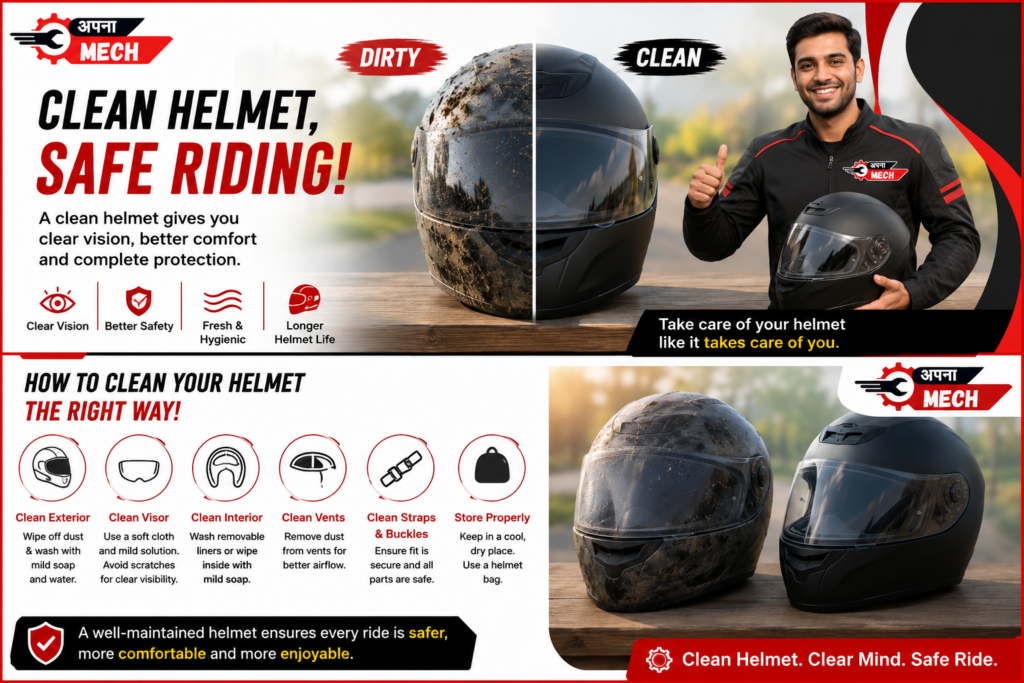
Your helmet is one of the most important pieces of riding gear. It protects your head during accidents, shields you from dust, wind, insects, and harsh weather, and makes every ride more comfortable. However, many riders focus on servicing their bikes while forgetting that helmets also require regular care.
Over time, sweat, dirt, dust, rainwater, and road grime build up on both the exterior and interior of the helmet. A dirty visor reduces visibility, blocked vents decrease airflow, and unclean padding can develop unpleasant odors and bacteria. Regular cleaning not only keeps your helmet looking new but also improves hygiene, comfort, and safety.
Here’s a simple guide from Apna Mech to help you clean and maintain your motorcycle helmet the right way.
Why Helmet Maintenance Matters
A clean helmet offers much more than a good appearance. It improves visibility, keeps the interior fresh, increases comfort during long rides, and extends the overall lifespan of your helmet. Regular inspection also helps you identify damage before it becomes a safety concern.
Clean the Helmet Exterior
The helmet shell is constantly exposed to dust, mud, insects, and pollution. Start by removing loose dirt using a soft microfiber cloth. For stubborn dirt, place a damp cloth over the affected area for a few minutes before gently wiping it away.
Wash the outer shell using warm water mixed with mild soap or baby shampoo. Clean the surface with a soft sponge or cloth, then wipe it dry with a clean microfiber towel. Avoid using petrol, thinner, alcohol-based cleaners, or abrasive chemicals, as they may damage the helmet’s paint and protective coating.
Clean the Visor Properly
A clean visor is essential for clear vision while riding. Remove the visor if your helmet design allows it and wash it with warm water and mild soap. Use only a microfiber cloth to prevent scratches.
If insects or dirt are stuck to the visor, cover it with a wet cloth for several minutes before wiping it clean. Never scrape the surface with sharp objects. If your visor has deep scratches that affect visibility, replacing it is a safer option than continuing to use it.
Applying an anti-fog solution or water-repellent coating can also improve visibility during rainy or cold weather rides.
Wash the Helmet Interior
The inside of your helmet absorbs sweat, body oils, dust, and moisture every time you ride. Without proper cleaning, it can develop bacteria and unpleasant odors.
If your helmet has removable liners and cheek pads, remove them carefully according to the manufacturer’s instructions. Wash them by hand using mild detergent and warm water. Rinse thoroughly and allow them to air dry naturally in a shaded area. Avoid using a washing machine or dryer, as excessive heat can damage the fabric and foam.
For helmets with fixed padding, wipe the interior using a damp cloth dipped in mild soap solution. Use a soft toothbrush for difficult corners if needed. Leave the helmet in a well-ventilated place until it is completely dry before wearing it again.
Keep Helmet Vents Clean
Helmet vents help circulate fresh air and reduce heat during rides. Dust, insects, and dirt can easily block these vents over time.
Use a soft brush, cotton swab, or compressed air to remove debris from the ventilation channels. Clean vents improve airflow, reduce sweat buildup, and make riding much more comfortable, especially during summer.
Inspect Straps and Buckles
Always check the chin strap and buckle while cleaning your helmet. Look for signs of wear, loose stitching, or damaged locking mechanisms. The helmet should fit securely every time you wear it. If the strap or buckle becomes damaged, repair or replace the helmet immediately.
Store Your Helmet Correctly
Proper storage helps extend the life of your helmet. Keep it in a cool, dry place away from direct sunlight and excessive heat. Use a helmet bag to protect it from dust and scratches. Avoid hanging the helmet on motorcycle mirrors for long periods or placing heavy objects on top of it, as this can affect its shape.
Common Helmet Care Mistakes
Many riders unknowingly damage their helmets by using strong detergents, household glass cleaners, petrol, or rough cleaning brushes. Drying the helmet under direct sunlight or storing it in extremely hot places can also reduce its lifespan.
Always use gentle cleaning products and allow the helmet to dry naturally.
When Should You Replace Your Helmet?
Even with proper care, helmets do not last forever. Replace your helmet if it has been involved in an accident, has visible cracks, damaged straps, loose padding, or a scratched visor that affects visibility. Most manufacturers also recommend replacing helmets after several years of regular use, depending on the model and riding conditions.
Final Thoughts
Your helmet is your first line of protection on every ride, and taking care of it is just as important as maintaining your motorcycle. Regular cleaning keeps the visor clear, the interior fresh, and the ventilation system working efficiently while helping extend the helmet’s life.
At Apna Mech, we believe that safe riding starts with proper maintenance. Along with keeping your bike in excellent condition through professional servicing and repairs, don’t forget to give your helmet the attention it deserves. A clean, well-maintained helmet ensures every ride is safer, more comfortable, and more enjoyable.

Add comment